best practices for playing the victim

As one year ends and another begins it’s a time of reflection and renewal for many people. They assess what they accomplished in their lives the previous year and begin planning the results they want to create in the New Year. Sure, there are those who will prattle on about the advantages of goal setting and action plans and blah, blah, blah. So what? That requires discipline and effort and focus and inconvenience and change and who has time for that? What if you could just short cut the process by playing the victim?

Ever played the victim? I sure have. I don’t mean being a victim of a crime or suffering for someone else’s actions. I mean wanting my life to be different, taking no actions to make it different, and then stockpiling an exhaustive list of reasons and excuses as to why it’s not different. I don’t want to brag, but I do believe I can use my experience to help you be a better victim.

If you’ve never played the victim, there are a few key strategies and best practices that are important to know as you start out. As with any skill, the masters can get away with things that amateurs can’t and I’ve tried to note some of those exceptions.

1. To justify your lack of progress ALWAYS compare yourself to others and NEVER compare yourself to yourself. Sure, some would say you can only measure success by the progress you’ve made given what you have and where you started, but there’s no place in victimhood for measuring your progress against your efforts. [NOTE: an expert level victim can use their own past failures as justification for not making any progress today, but it’s a tricky thing because even a casual observer might make the rational argument that yesterday is not today. Leave this one for the pros.]

2. It’s also important to compare yourself to people with completely different circumstances, skills, strengths, and gifts and use that as proof that you can’t create the difference you want in your life. BUT it’s very important to only look at those who had advantages over you, NEVER compare yourself to those who had more to overcome. For example, if I was creating excuses for not being wealthier I’d only want to compare myself to those born into money and never ever compare myself to a first generation refugee struggling with new culture and language who became a millionaire by working three jobs, foregoing all luxury, saving every dime, and investing prudently for thirty years. [NOTE: A truly masterful victim can compare themselves to those who have it worse by twisting that hardship into an “unfair advantage.” But, don’t try that the first time you play the victim as you’ll end up looking petty and silly.]

3. When you compare yourself to others who have been more successful at what you’re not accomplishing, be sure to minimize their efforts by writing it all off as being “lucky”. Sure there is always going to be an element of location, timing, help, and unexpectedness to any success story, but being a good victim means focusing only on the advantages that were outside the other person’s control. If I wanted to justify, say, my lack of success as a musician, I’d look at person who was an “overnight success” ten years in the making and complain that it all comes down to who you know. [NOTE: never try to apply logic to your victimhood. You want to create rationalizations, not be rational. There’s a difference.]

4. A key part of being a really great victim is to choose reasons that you have absolutely no control over and then use that as justification for never changing the things over which you do have control. For example, if I wanted to justify why I’m a poor swimmer, I might say, “The best swimmers are much taller and have longer arm spans than me. There’s nothing I can do about being short, so I’ll never be a better swimmer.” You might be thinking that I might never be a gold medalist but I could – maybe – improve my swimming by taking lessons and actually getting into the pool occasionally. And you’d be right, BUT you’ll never be a good victim with that kind of reasoning.

5. Memorize this phrase and use it a lot: “I tried that, but….” This phrase does wonders for giving legitimacy for half-hearted efforts. Forget persistence, never mind actual results, simply dismiss any lack of progress by saying, “I tried.”

6. Seek help from others, but never from anyone who might be able to help you. Actually, seek “help” by only finding people with whom you can commiserate and complain. Ideally, you’ll want to find someone who will not only believe you excuses but will enthusiastically support and build on them.

There’s just a few tips to get you started. Of course, you’ll find and develop your own victimhood style as you go. The really nice thing about playing the victim – if you do it well – is that your lack results and progress will never be your fault. Sure, you won’t create the life or career you actually want but at least you’ll sleep soundly knowing it wasn’t you that got in your own way.

Day 5: The Less Things Change…

This is a post I contributed to The HR Juggler for Alison Chisnell’s Advent 2013 series. It’s a great series of posts from HR and L&D types, kicked off by Simon Heath, Peter Cook, Bina Briggs, Andrew Jacobs, and myself. Can’t wait to see who’s up next.

Alison Chisnell's avatarThe HR Juggler

2013day5

Today’s post is written by Broc Edwards, author of the excellent ‘fool with a plan’ blog.

Artwork for today (and every day!) is provided by the brilliant Simon Heath.

******************************************************************

the less things change, the more they stay the same

The alarm hasn’t gone off yet, but it will in a few minutes. It’s 4:25am and I’m tired, I’m hungry, and I hurt. All over. In a few minutes, I’ll be getting up to run five miles in 32 degree weather. I’m officially ten days into my training program. Only one hundred and seventy to go…

*     *     *     *     *

By all rights and measures, 2013 has been a banner year for me, full of accomplishment and rewards. Great things have been happening both personally and professionally and I accomplished several significant, long-held goals. I was asked to chair not-for-profit group that provides leadership development in the…

View original post 1,207 more words

it’s a dog’s life: another post on gratitude

Photo: Sound asleep and snoring.

Sound asleep and snoring. It’s a dog’s life.

Watching my kids’ puppies gnawing away on their chew toys last night, I wondered if they spend any time in wonderment of their good fortune. Do they ever think, “Woohoo, I won the doggy lottery! How did I get so lucky”?

Both were rescued, saved from neglect and starvation, and then adopted by my kids. They have the love of children, other dogs to play with, a big yard, a house to sleep in, and full bellies. It is such a different situation from where they came from that I found myself pondering whether they remember and think about the contrast.

Of course, then I immediately thought, “Do I fully appreciate my situation? Do I think about what could have been or spend any time wondering, “How did I get so lucky?”  Sure, I like to think I work hard and make reasonably good choices, but I had nothing to do with when and where I was born and raised. Being born into a stable family, in a wealthy country, during a time of little conflict and good medical care, having access to education, and never worrying about having enough to eat kinda gives a person a running head start at life. An enormous part of the world’s population spends far too much of their day just trying to survive until the next. Too many don’t enjoy basic human rights or rule of law to protect them. Too many go without education, food, or even just clean water.

I don’t know how to ease suffering or create prosperity for billions of people. I can’t fix anarchy and tyranny. I’m unable to prevent brutal attacks on people caught in the crossfire of long running conflicts. I can’t erase envy, greed, and corruption from human nature. I don’t know how to correct the world’s problems or balance out inequality or make sure that children don’t go hungry.

Thinking about that contrast, I feel – I believe – I owe the world something in return for my good fortune. There’s so much I can’t do, but I can put love back into the world. I can raise my kids to understand that ethics and personal responsibility are far more important than short-term happiness and instant gratification. I can do work that is meaningful to me and has a positive impact on others. I can try to find ways to bring out the best in myself and those around me. I can be grateful for my situation and remember that no matter how bad my day gets, it’s not really all that bad – there are several billion people who would trade places in a heartbeat.

Most important, I can make sure I’m not squandering the advantages and blessings I’ve been handed.

What thinks you?


ignoring the success stories

There’s two kinds of business success stories that everyone talks about and then learns nothing from.

The first is the upstart business that is just doing things disruptively different. Their organizational structure and processes go against the cookie cutter business school best practices. Companies like Valve with its completely flat org chart and BrewDog with their “Equity for Punks” customer ownership program come to mind. We all marvel at their ingenuity and then insist that it’ll never work anywhere else or dismiss it as being only viable for startups. We think that putting meaning or innovation ahead of the Wall Street Quarterly Numbers Game is somehow poor business.

The other is the upstart that hits it big: Apple, Amazon, Google, Zappos. We churn out the stories about their cultures and benefits and all the quirks of their leaders and then promptly focus on all the wrong lessons. Tire swings in the lobby won’t give you Google’s profit margins. Being weird for the sake of weird won’t give you Zappos’ customer retention. And wearing turtlenecks and screaming at people won’t give you Apple’s innovation and iconic status.

Steve Jobs’ gift wasn’t for leadership. His brilliance was in his unrelenting focus on design and the customer above all else. He thought long term and insisted on getting right all the details that no one else realized were details. I believe the single most important lesson we can take from Steve Jobs legacy is summed up in a quote from him:

“If you keep your eye on the profit, you’re going to skimp on the product. But if you focus on making really great products, then the profit will follow.”

This could be re-written for Zappos, just replace “product” with “customer service”. Or for any of the businesses, big or small, that succeed doing things disruptively different.

The magic “different” is almost always a relentless priority focus on creating meaningful products or services that customers value, love, and rally behind. Profits are important but seen more as a way to keep the doors open and create better products and services versus the end all be all. Profits are a means, not an end.

We admire the innovation, the ingenuity, and – yes – their profitability and then we all go back to focusing on profits over products, dollars over meaning, creating unhealthy dysfunction and disorder.

Consider it this way. Elite athletes are thin, skinny even, but not because they want to look like runway models. Athletes aren’t lean out of fashion or vanity; they are lean out of necessity. Extra weight on an athlete isn’t unattractive, it’s a crucial few extra hundredths of a second, it’s reduced performance, it’s finishing second. Being lean is the byproduct of focusing relentlessly on fitness and performance; it’s the means, not the end.

But what if we, in our emulation of athletes, got it backwards? What if we just focused on being thin first and foremost and slashed our calorie intake to survival levels? If an athlete were to focus on being supermodel thin, their performance would drop immediately and drastically. They wouldn’t have the necessary muscle to perform and the muscles they did have wouldn’t be receiving enough fuel to excel or even train and develop.

Now, let’s look back at companies. We want companies to perform at the highest level, but so often we focus on profits as the end rather than the byproduct of performance. It’s when we get those confused that the problems start.

We start cutting expenses to the bone and don’t invest in the things we need to be profitable in the future. No athlete in the world would stop training because they were worried that the muscle they were adding would hurt performance. Yet, one of the first things cut in organizations is learning and development. When performance is down, we eliminate one resource that helps improve performance (whaaaa?). The next to go is staff – those people who create, deliver, and support the products and service the customer pays for). So we end up with fewer people who are less skilled and somehow consider that better than having more people who are more skilled. (Please show me one successful sports team that’s run this way. Just one.)

Or we start binging and purging with hiring and layoffs. We focus on the image in the mirror (or in the spreadsheets) instead of how fit and healthy we are. We get corporate liposuction by selling off assets or radically cutting costs, making the company look good temporarily but without addressing the long-term decisions and habits that made the company overweight or underperforming in the first place.

We start asking, “What costs can we cut?” instead of “What resources should we invest more in?” We ask, “What can we offer that we can charge the customer more for?” instead of “What would our customers really value?” We ask, “How can we improve our numbers this quarter?” instead of “What do we need to do to be a thriving company ten years from now?”

Company performance and meaning aren’t mutually exclusive. Done right, profits help us create even more meaning, leading to more profits. Done wrong, a singular focus on profits kills meaning and, ironically, hurts long-term performance.

It’s fascinating how we have examples of the philosophies and attitudes that help create standout companies. We study them, give them a hero’s status, and then quietly return to doing what everyone else is doing.

What thinks you?


will it have mattered?

“Here is the test to find whether your mission on Earth is finished: if you’re alive, it isn’t.” ~ Richard Bach


Will it have mattered that I was here? Mattered in my life, my work, in my family, in the world? When I move on to whatever’s next, will anyone notice? Have I made full use of talents given? Have I developed other talents? Is the world better for my being here; am I better for having been in the world?

Have I loved, been loved, created more love in the world than was here when I arrived? Were my relationships strong or just people I knew and “liked” (thumbs up)? Did the people in my life know just how important they were to me? How far did I influence and how strong was my presence and what difference did it have?

Did I move humanity and humanness forward or hold it back? Have my thoughts and actions enlightened or darkened? Did I live with purpose or just get through another day? Did I contract or expand? Was every day a fuller day of life or just one day closer to death?

Did it matter? Did I matter? Have I eased pain and suffering, created ways for others to do better, helped at all? Was it all about me or all about them or all about us? If I had to account for privilege of living and show my results and justify the blessings given, could I? Did I care? Did anyone care?

Have I made excuses and justifications or owned every decision and action? Are the outcomes in my life mine or did I give those choices to others? Did I anchor myself to my limitations or set off to find new boundaries? Will others look past my life or will they find inspiration and possibility and hope for their own?

The clock ticks, the second hand moves, the days slide past. It’s so easy to get caught up in the day and forget to live; so easy to get it done while neglecting to make it matter.

Will I pass with the satisfaction of giving it all or the agony of wondering if it were a mistake? Will it have mattered?

comfort zones are so… comfortable

Us humans can talk about pushing boundaries, thinking outside the box, or getting outside of comfort zones all we want. Deep down we know that there is no growth, development, change, or improvement without discomfort. But we hate that. We really do. We want to believe the marketing hype that says change and improvement is easy and effortless and fun.

Picture a cold, wet, stormy winter night and you’re snuggled in a soft, plush, fleecy blanket by the fire while drinking hot chocolate and watching your favorite movie. That’s your comfort zone – it’s all warm, cozy, and oh so gloriously relaxing.

Now, picture that same winter night and your spouse comes into the room and inexplicably yanks the blanket off, turns on all the fans and A/C, and changes the channel. THAT’S what stretching your comfort zone feels like. Not life threatening, just really, really irritating. And we want to fix it immediately and return to our blissful cocoon.

Deep down inside the lizard brain we’re wired to avoid discomfort. It’s a survival trait that goes to the roots of our existence. Hypothermia, starvation, and injury are kind of a big deal when you’re 75,000 years from the nearest heated house, stocked fridge, and health clinic. Pain is a fabulous instructor because it teaches us to not do things that might result in injury, dismemberment, or death.

The problem is, we’re also wired to survive one more day. Our lizard brain only worries about right now, not 20 years out. The mechanisms that keep us from freezing or starving to death don’t work well to protect us from the long term dangers brought about by sloth, overconsumption, or NOT changing with the world. Our bodies are great at telling us to eat, but not so good at telling us to back off; great at teaching us not to stick our hands in the fire, but lousy at encouraging us to seek out new skills, knowledge, and people.

Related to all this, us humans also hate, hate, hate to be denied something we want. It becomes a tickle in the brain that we’re soon obsessing over until we HAVE TO HAVE IT!!!! Again, it’s a great survival trait when our bodies are trying to get us to go hunt something so we can eat for another day, but counterproductive when we’re trying to create long term behavioral change like eating less, saving more, getting up earlier, learning new skills, etc.

The longer we stay in our comfort zone, the more it starts to shrink. We step back from the edge to provide a cushion of comfort and the edge moves inward. So we step back again. Pretty soon we find we’ve trapped ourselves in a very small, very tiny, very restrictive place. And we wonder why our lives and careers aren’t where we want them.

Worse, yet. When faced with danger – physical, emotional, mental – we retreat to what we know. The more uncertain the situation, the more dogmatically and desperately we cling to the things we are certain about. Ironically, the moments we need to change the most are the moments we are most resistant to change.

All of this has huge implications for leading change, training and development, and personal and professional growth. It’s not that we can’t or won’t push on those self-imposed boundaries, it’s just that we’re highly resistant to discomfort.

How often do we put off the diet or fitness or savings plans until “tomorrow”? How often do we delay going back to school or seeking out new training until “the time is right”? How often do we dangerously delay important decisions until we “have more information”? How often do we dismiss new approaches out of hand, preferring to stick to “tried and true” and “best practices”?

What thinks you?


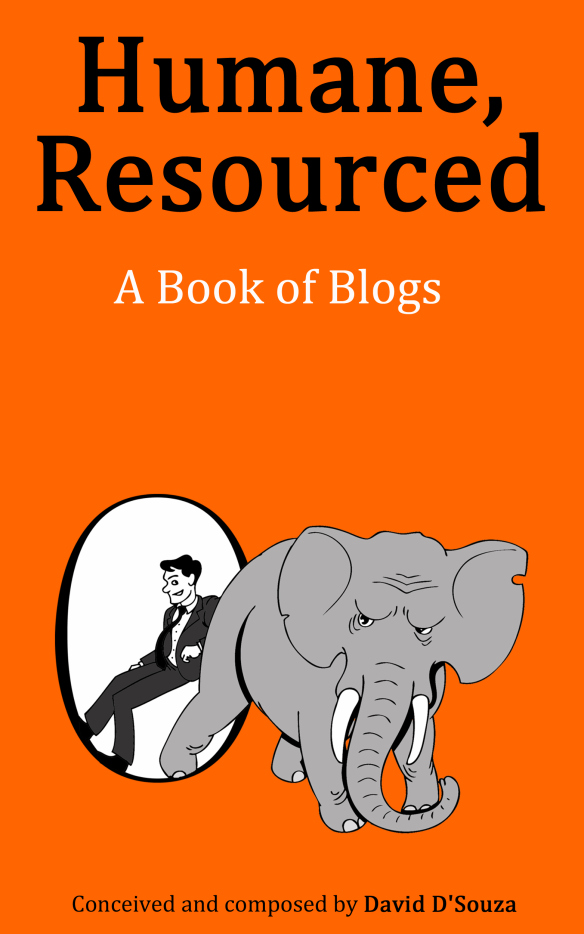
Humane, Resourced – early reflections

A simple project with amazing results. What started as a collection of blog posts from a few folks has morphed into a best selling business e-book with over 50 contributors. Not bad. Can’t wait to see what comes next.

humane, resourced

Humane ResourcedFeeling pretty awesome this morning. I can now officially lay claim to contributing to an internationally best-selling HR and Business book.

The Kindle book Humane, Resourced was released just the other day and is already climbing the charts. As of this morning, I’m told it’s at #21 for HR books in the US Kindle store and #2 in the UK. It’s also sitting at #8 for Business books in the UK. I’m sure these numbers will be out of date by the time I post this. Buy your copy now – all proceeds go to charity.

“Humane, Resourced” is a collection of contributions from over 50 business, HR, and L&D bloggers, each bringing their own unique perspectives and voices to the loose topic of people and work. Given the contributors, thought-provoking kicks to the head are inevitable:

1.    Simon Heath (@SimonHeath1)
2.    Doug Shaw (@dougshaw1)
3.    Sukh Pabial (@sukhpabial)
4.    Ian Davidson (@ianandmj)
5.    Bruce Lewin (@fourgroups)
6.    Ben Morton (@Benmorton2)
7.    Richard Westney (@HRManNZ)
8.    Lembit Öpik (@Lembitopik)
9.    Emma Lloyd (@engagingemma)
10.  Gemma Reucroft (@HR_gem)
11.  Stephen Tovey (@StephenTovey13)
12.  David Richter (@octopusHR)
13.  Amanda Sterling (@sterling_amanda)
14.  Wendy Aspland (@wendyaspland)
15.  Peter Cook (@AcademyOfRock)
16.  Julie Waddell (@jawaddell)
17.  Leticia S. de Garzón (@letsdeg)
18.  Vera Woodhead (@verawoodhead)
19.  Nicola Barber (@HRswitchon)
20.  Tim Scott (@TimScottHR)
21.  Amanda Arrowsmith (@Pontecarloblue)
22.  Inji Duducu (@injiduducu)
23.  Anne Tynan (@AnneTynan)
24.  Neil Usher (@workessence)
25.  Louisa de Lange (@paperclipgirl)
26.  Megan Peppin (@OD_optimist)
27.  Ian Pettigrew (@KingfisherCoach)
28.  Steve Browne (@stevebrowneHR)
29.  Kate Griffiths-Lambeth (@kateGL)
30.  Tracey Davison (@mindstrongltd)
31.  Jason Ennor (@MYHR_NZ)
32.  Bob Philps (@BPhilp)
33.  Kat Hounsell (@kathounsell)
34.  Simon Jones (@ariadneassoc)
35.  Mervyn Dinnen (@MervynDinnen)
36.  Alex Moyle (@Alex_Moyle)
37.  Julie Drybrough (@fuchsia_blue)
38.  Susan Popoola (@susanpopoola)
39.  Ruchika Abrol (@ruchikaabrol)
40.  Simon Stephen (@simonstephen)
41.  Damiana Casile (@damiana_HR)
42.  Honeydew_Health
43.  Malcolm Louth (@malcolmlouth)
44.  Perry Timms (@perrytimms)
45.  Sinead Carville (@SineadCarville)
46.  Jon Bartlett (@projectlibero)
47.  Jane Watson (@JSarahWatsHR)
48.  Broc Edwards (@brocedwards)
49.  Sarah Miller (@whippasnappaHR
50.  Meghan M. Biro (@MeghanMBiro)
51.  Anna Lloyd (@buggilights)
52.  Luke Thomas(@springccr)

“Humane, Resourced” was conceived, organized, and promoted by David D’Souza (@dds180) over in the UK. He gets massive kudos for making this book happen. Can’t wait to see his next project.

networking for introverts?

The other day, Tim Mushey of Sell, Lead, Succeed fame raised a question about networking. It was a great question because it made me stop and think and I realized that even though my connections with others are really important to me, I spend almost zero time thinking about “networking” or “my network.”

I should be the world’s worst networker: I’m terrible at small talk, I can’t “work a room” to save my life, and if I’m at a party I’ll spend most of my time in the kitchen talking to one other person about books or bicycles. Life of the party I’m not.

Yet, somewhere along the way, something happened and and I find myself in the middle of a great network of really terrific people. Enough so that my wife insists I should write a book about networking for introverts. I don’t think I have that much to say about it, but I do have a few tips I could share – just observations from my own life. Your mileage may vary.

1. Forget all about “networking”. I’m not a big fan of the word because it makes it sound like a separate activity. Just live your life. You already have a network of people and relationships, now just start thinking how you can broaden and deepen it.

2. Focus on meeting interesting people. This is my biggest piece of advice. Don’t worry about meeting everyone, just seek and find people in your field who are up to interesting things and build the relationship from there. The really, really cool thing is that interesting people by their very nature know lots of other interesting people.

How do you meet them? Ask around. Seriously, just ask, “Who else is doing cool things that you’d suggest I meet?” You’ll get some great answers. The second is social media – it’s an amazing shortcut to fascinating people around the planet. Follow someone you admire in your field on Twitter (or whatever social media you prefer) and start looking at what blogs they read, who they’re connected to, etc. and begin following and connecting with those folks.

3. Think long term. It’s not a race. Let connections and relationships build naturally over time.

4. Social media is a great starting point, but it’s just a starting point. Build relationships in real life. This past year I made a point of reaching out and asking people I only knew through the internet to chat via Skype of phone. I got sidetracked and really need to focus on this again because I’ve been able to meet and learn from some truly phenomenal people.

5. Networking numbers are stupid. I’m baffled by the ads that claim to provide 10,000 Twitter followers for $29.95 (or whatever) because, who cares? Just because someone is following you or you are following them doesn’t mean there is any connection. Oh, you handed out 100 business cards at the last conference. So what? Numbers are irrelevant. It’s better to have a true connection with 20 people than to be largely ignored by thousands.

6. People and relationships matter. You don’t have to care about everyone on the planet (though it’s nice if you do), but it shows pretty quick if you’re not investing time and energy in the people in your life.

7. Realize people are willing to connect with and help you. Several years ago my job was eliminated. With a family to feed and an immediate need for work, I started calling up key members of my professional association and asking if I could meet with them to get their advice on job hunting in the city I was living in – who’s hiring, which companies have a great/terrible reputation, who else should I speak with, etc. No one turned me down. No one hesitated. People I’d never met before went out of their way to meet, talk, and help. On a smaller scale, people I’ve met only through social me have been surprisingly quick to respond to questions.

8. Focus on what you can do to help others. If it’s all about you or your approach is very transactional, you will have a weak, sucky network. If there is actual dialog and it’s clear that you authentically want to help others, you’ll have a strong, robust network.

To sum up, here’s everything I know about networking in two short sentences: Forget “networking”. Find interesting people and build great relationships.