High Performance Company

humane, resourced

Humane ResourcedFeeling pretty awesome this morning. I can now officially lay claim to contributing to an internationally best-selling HR and Business book.

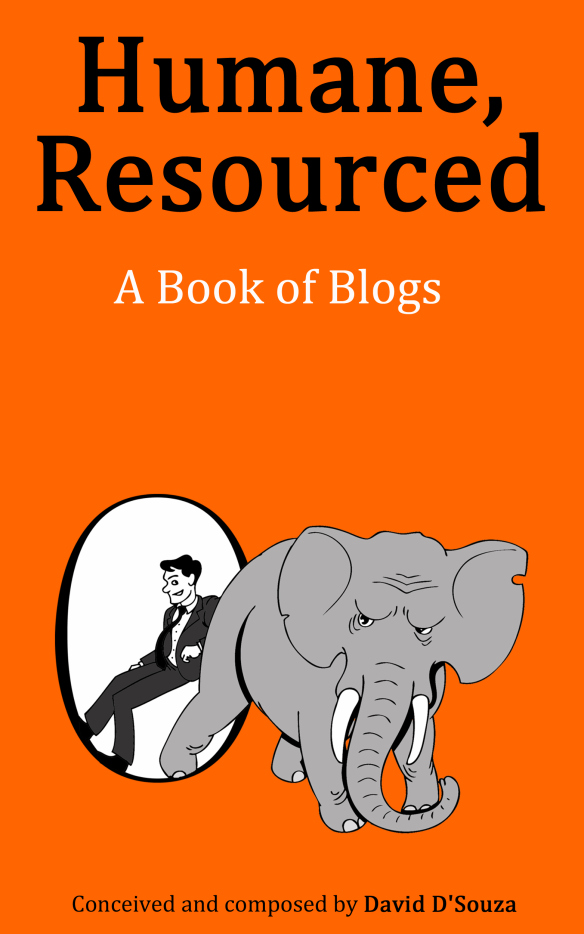
The Kindle book Humane, Resourced was released just the other day and is already climbing the charts. As of this morning, I’m told it’s at #21 for HR books in the US Kindle store and #2 in the UK. It’s also sitting at #8 for Business books in the UK. I’m sure these numbers will be out of date by the time I post this. Buy your copy now – all proceeds go to charity.

“Humane, Resourced” is a collection of contributions from over 50 business, HR, and L&D bloggers, each bringing their own unique perspectives and voices to the loose topic of people and work. Given the contributors, thought-provoking kicks to the head are inevitable:

1.    Simon Heath (@SimonHeath1)
2.    Doug Shaw (@dougshaw1)
3.    Sukh Pabial (@sukhpabial)
4.    Ian Davidson (@ianandmj)
5.    Bruce Lewin (@fourgroups)
6.    Ben Morton (@Benmorton2)
7.    Richard Westney (@HRManNZ)
8.    Lembit Öpik (@Lembitopik)
9.    Emma Lloyd (@engagingemma)
10.  Gemma Reucroft (@HR_gem)
11.  Stephen Tovey (@StephenTovey13)
12.  David Richter (@octopusHR)
13.  Amanda Sterling (@sterling_amanda)
14.  Wendy Aspland (@wendyaspland)
15.  Peter Cook (@AcademyOfRock)
16.  Julie Waddell (@jawaddell)
17.  Leticia S. de Garzón (@letsdeg)
18.  Vera Woodhead (@verawoodhead)
19.  Nicola Barber (@HRswitchon)
20.  Tim Scott (@TimScottHR)
21.  Amanda Arrowsmith (@Pontecarloblue)
22.  Inji Duducu (@injiduducu)
23.  Anne Tynan (@AnneTynan)
24.  Neil Usher (@workessence)
25.  Louisa de Lange (@paperclipgirl)
26.  Megan Peppin (@OD_optimist)
27.  Ian Pettigrew (@KingfisherCoach)
28.  Steve Browne (@stevebrowneHR)
29.  Kate Griffiths-Lambeth (@kateGL)
30.  Tracey Davison (@mindstrongltd)
31.  Jason Ennor (@MYHR_NZ)
32.  Bob Philps (@BPhilp)
33.  Kat Hounsell (@kathounsell)
34.  Simon Jones (@ariadneassoc)
35.  Mervyn Dinnen (@MervynDinnen)
36.  Alex Moyle (@Alex_Moyle)
37.  Julie Drybrough (@fuchsia_blue)
38.  Susan Popoola (@susanpopoola)
39.  Ruchika Abrol (@ruchikaabrol)
40.  Simon Stephen (@simonstephen)
41.  Damiana Casile (@damiana_HR)
42.  Honeydew_Health
43.  Malcolm Louth (@malcolmlouth)
44.  Perry Timms (@perrytimms)
45.  Sinead Carville (@SineadCarville)
46.  Jon Bartlett (@projectlibero)
47.  Jane Watson (@JSarahWatsHR)
48.  Broc Edwards (@brocedwards)
49.  Sarah Miller (@whippasnappaHR
50.  Meghan M. Biro (@MeghanMBiro)
51.  Anna Lloyd (@buggilights)
52.  Luke Thomas(@springccr)

“Humane, Resourced” was conceived, organized, and promoted by David D’Souza (@dds180) over in the UK. He gets massive kudos for making this book happen. Can’t wait to see his next project.

FutureNow of work?

You keep using the word ‘FutureNow’ – what does that mean?” A fair question. It’s a term I made up to describe where work is heading. I’m very intrigued by social businesses and democratic workplaces and started describing them as the future of work that’s already happening right now.

As an example, in 2009, smart phones were the FutureNow of mobiles phones. To many of us they seemed like overpriced toys, yet became ubiquitous in only a couple of years. From today’s perspective, it’s easy to see how and why the smart phones were the future.

The same could be said of any technological advancement. MP3 players in, say 2002. Email in 1996. Television in 1947. Automobiles in 1913. Etc., etc. All these were the FutureNow when they first came out. But we can look back at societal progress as well and there were some hard fought advances that are now seen as normal and natural to the majority of folks.

Two hundred years ago, we were trying to figure out how to make a democratic government work well (and the cynics will make a strong case that we’re still trying to figure it out). Today it just seems obvious and natural (to those in a democracy) that democracy is the way to go. Battles and wars are fought to replace dictators with voters.

I find it interesting that there is such a strong, common belief that democracy is the best way to organize a country, yet we balk at the idea of a democratic workplace. So much of business is still stuck in the authoritarian, patriarchal (ugh!), top down, command and control ways of the past. It feels weird to question and ask about other organizational structures. It might even seem a bit anarchistic or just counterculture hippie to suggest that maybe, just maybe, businesses could benefit from and improve on the democratic practices that run entire nations.

More on this later. In the meantime, just be aware that the future is already here and doing some really cool, innovative things. What’s strange today will be obvious tomorrow.

defining and shaping What Comes Next

In a couple of weeks, on November 11 and 12 Jason Lauritsen and Joe Gerstandt of Talent Anarchy are hosting/leading/facilitating an event called The Frontier Project on “Designing The Future of Work.” More think tank than conference or training, this is a chance for you to get together with 50 or so other sharp, passionate, innovative, and curious folks to discuss, debate, and (re)imagine where work is headed, where it needs to go, and perhaps what you can do about it in your world. Joe recently wrote about about it here.

I attended their first Frontier Project back in May and am excited for the chance to attend this next one. Although Jason and Joe are both masters at giving the box called “status quo” a good and vigorous shaking, I’m most looking forward to meeting and learning from the other participants. I don’t know who will be there but I’m expecting and hoping to see a mixed group of thought leaders, forward thinkers, and everyday professionals looking to define and shape What Comes Next. Interested? Sign up here (and notice you have one more day for the early bird discount).

Yes, I wrote about this a few weeks back and I’m writing about it again. I love to think about the FutureNow of work and I’m very excited to see Joe and Jason hosting another Frontier Project. It, along with the Meaning conference over in the UK, are two standout events dealing with what work could be. I’m encouraged and hope to see more and more events like these in the coming years.

I don’t know what this Frontier Project is going to look like, but I know what I got out of the last one. Rather than giving you a link, I decided to make it even easier and have included the summary I wrote and posted on May 29 after the first Frontier Project.


don’t predict the future, declare it

Human Resources, like many fields, is at a cross roads where its future is at a disconnect with its past. Many of its reasons for being have become irrelevant, easily outsourced, or reduced to a minor function. Some predict the end of HR; others cling to it. Ultimately, the future of business and work will decide the future of HR.

The Frontier Project, held May 20 and 21 in Omaha, Nebraska had the stated purpose of “Reimagining the Role of Human Resources.” That’s a bold tagline creating huge expectations and it was an interesting mix of 40 or so HR pros, consultants, vendors, and thought leaders who attended.

Jason Lauritsen and Joe Gerstandt led the group using an accelerated decision making process. Normally, it’s a technique used to create a decision and action steps for a specific problem. Applying it to the future of a field while still creating individual actions is a bit trickier, but worth the effort.

So, what’s the future of HR? I’m not telling. Not because I took a blood oath of secrecy; because I don’t know. No one does. But here’s a few thoughts I took away from the two days:

Predicting the future is really, really difficult. Particularly for experts because they know exactly how things are in the field, but most innovation and change is ignited from outside the field. If one isn’t careful, focused expertise leads to being blindsided. To prevent getting stuck in what our expertise demonstrated was right, we were told to use our “imagination, not expertise.” Regardless, it’s still difficult. Could you have imagined 2013 in 1993? Could you have imagined 2013 in 2008 before smart phones and social media took off? Another bit of advice for imagining the future: “If it makes sense today, you’re probably not pushing far enough out.”

Even people who think like me don’t think like me. Oddly enough, the future I’m convinced will happen looks different than the futures 39 other people are convinced will happen. We all have biases and, although there’s some overlap, it’s really easy to get stuck in our own reality tunnels.

When people discuss the most important things the field of HR should be focused on it sounds very buzzwordy business-speak. Lots of jargon. Lots of mention of technology, big data, etc. But when people describe what makes their job great it there is a strong emotional and personal connection. I don’t know what that schism means, but it makes me wonder.

The field of HR is so divided between administrative and strategic functions it makes me wonder if we shouldn’t identify them as separate fields. I suspect much of HR’s identity crisis would go away if we acknowledged we’ve been trying to find unifying answers for (at least) two distinct fields. Much as finance and accounting or marketing and sales are split, imagine the issues that would quickly dissolve away if we could allow HR to move in two different directions.

“Us vs them” is a powerful, powerful quirk of human thinking. It carries a lot of judgment and self-righteousness. Be very careful how you define “us” and “them”. Consider the possibility that it might really be “us and them”, or even just “us”.

Some other quick thoughts (mostly shared by others):

HR needs to stop waiting for someone to ask us to do and simply find what needs to be done and get on with it. If it requires permission, make a case for it and sell it. Stop waiting.

Technology/tools can be an enhancement or a distraction from the people/business connection. Like all tools, none are inherently good or bad, but how we use them determines how much they will help or hinder.

Statistics can’t predict the individual. Ever.

Integrate HR into the business processes instead of trying to integrate the business processes into HR.

Use imagination first to play and explore and then apply expertise to make it possible.

The future is scary when you don’t feel you have any control. The future is exciting when you feel you are creating it; it’s threatening when you want things to stay the same (or go back to being how they were); it’s liberating when you see how it could be even better than today.

I need to spend more time kicking ideas around with smart, passionate people. Really can’t do that enough.

 There’s lots more from those two great days that I’m still processing and thinking about. Joe and Jason are threatening to offer it again in the future and I’m excited to see how The Frontier Project evolves. Good, good stuff.
what if people mattered?

Imagine with me for a moment…

What if people mattered to the success of a business?

What if people were a crucial part of delighting customers and ensuring return business?

What if people were necessary to create and invent and innovate?

What if people used their experience and judgment to make decisions that affect outcomes?

What if people each had their own strengths, weaknesses, goodness, and extremes?

What if people each had their own interests, dreams, desires, and constraints?

What if people weren’t all the same and couldn’t be removed and replaced like gears on a machine?

What if people were sometimes employees, sometimes shareholders, or sometimes customers? What if they were sometimes all three at once?

What if people were complex and unpredictable and that sometimes leads to brilliance?

What if people were complex and unpredictable and that sometimes leads to disaster?

What if people had their own lives going on and didn’t live or die for the organization?

What if people weren’t all like you?

What if people were different and that difference might create strife, conflict, chaos, energy, synergy, and great leaps forward?

What if people had uniqueness that was both their biggest strength and worst weakness?

What if people were necessary to get work done?

What if people need businesses less than businesses need people?

What if people were required to interpret data and make decisions and take actions based on sound judgment, intuition, and wild guesses?

What if people invented and built all the technology that changes business?

What if people wanted to feel safe, respected, liked, and valued?

What if people made decisions and took actions based on their feelings and emotions and only used logic and reasoning to justify their decisions and actions?

What if people didn’t always act in their own best interests?

What if people sometimes do stupid things?

What if people were more loyal to people than to the initials inc., llc., gmbh., or ltd.?

What if people and the relationships they have with other people generated more business than spreadsheets?

What if people were necessary to dream up, make, deliver, and improve the products and services your business sells?

What if people were a crucial part of creating compelling messages, attracting and assisting customers, and growing the business?

We’re still just imagining here… But what if some – any – of this were actually true? What if people, in all their complex, irrational, unpredictable, humanness, were actually crucial to business results?

Would that change the emphasis on how much effort you put into finding and hiring the right people?

Would you put a different level of priority on your efforts to develop and improve the people you invested in by hiring?

Would the employee experience become important?

Or, if you knew people were actually a prime competitive advantage, would you pretend they weren’t and spend your time, energy, and money on other things?

check the box and move on

checkboxThe other day I heard someone say, “It’s better to do the right thing poorly than the wrong thing well.” This made me stop. Do something poorly? Blasphemy! Yet…

So many of the things we measure in business (and in life) make no distinction on whether our actions are focused on the right or the wrong things. Only: 1) whether or not we’ve accomplished them; and 2) how well we accomplished them.

Check the box and move on. Don’t bother to consider whether the actions helped or hurt, moved us forward or held us back. Focus on quality, not usefulness. Check the box and move on regardless of whether there was a different action – a better action – we could have taken.

Check, check, check.

People ask us how our day was. We say, “Busy.” We don’t say, “Productive” or “Effective” or “It was bumpy but we’ve made some good strides in the right direction.”

It makes me wonder how much time we spend focused on doing the wrong thing well. Measuring whether something is done is so much easier than measuring if it was right or the best thing to do. So we don’t worry about it.

Nope. Just check the damn box and move on.

(re)thinking the future of work

“Look, if you had one shot, or one opportunity to seize everything you ever wanted; one moment. Would you capture it or just let it slip?” ~ Eminem from “Lose Yourself”

“The future is scary when you don’t feel you have any control. The future is exciting when you feel you are creating it; it’s threatening when you want things to stay the same (or go back to being how they were); it’s liberating when you see how it could be even better than today.” ~ Participant’s comment from The Frontier Project: The Future of Human Resources


You have an opportunity. A chance worth taking. A moment to come together with others who are ferociously passionate, smart, curious, insistent, pioneering, wondering.

I’m fascinated by the FutureNow of work. The seeds and sprouts of the inevitable(?) changes disrupting how we’ve always thought about jobs and organizations are there taking root and starting to grow. Technology shrinks, twists, and alters “how we’ve always done it.” Socioeconomic schisms have been opened up by tectonic shifts in the economy. Organizational structures, once certain, are being shoved aside in the quest for something better. The curtain has been pulled back revealing the illusion of control. And us humans keep being humans in all our rule bound sloppy illogically rational educated ignorance. History repeats with a fresh coat of paint and a different pattern of wall paper. Change keeps on changing. Round and round she goes, where she stops…

It’s overwhelming. But what if you could get ahead of the curve? What if you could be a part of creating the future instead of wondering, worrying, and letting it wash over you?

Talent Anarchy is at it again, shouldering their way to the forefront of disruptive thought with The Frontier Project: The Future of Work. Jason Lauritsen and Joe Gerstandt have set aside some space and time near Houston in November for a diverse group of folks to come together and think, consider, wonder, and debate the Future of Work. Jason and Joe will be setting up the framework, then poking, prodding, and asking questions, but the real work and the answers will come from the group.

So here’s your opportunity. The Frontier Project is a “think tank on steroids” (in Jason’s and Joe’s words) designed to push buttons, challenge assumptions, get past the here and now, and play with what could/should/will be. It’s a chance for you to look to the future and (hopefully) come away with some very real ideas for what to do right now.

This isn’t a training, conference, or seminar. If you crave certainty and finely crafted bullet point lessons this event is not for you. There are no foregone conclusions, inevitable solutions, guarantees where the discussion will go, or certainty where the answers will come from.

As a reader of this blog you know I’m a friend and fan of Talent Anarchy. They’ve asked me to help get the word out about the event – something I’m more than happy to do because I’m excited to attend and looking forward to what comes next. I’m inspired by Jason and Joe’s intensely thought provoking irreverence, rejection of business as usual, and the challenge they’ve laid to the world to embrace our authentic humanness. They are continually thinking bigger and have extended an invitation to join them.

I hope to see you there. The future’s coming fast and we all have work to do.

not another post on change

Change has been on my mind lately. Judging by recent posts from other bloggers, I’m not alone. Change is everywhere, every day, always happening, yet handling and managing change is a persistent issue.

Connie Podesta jokes that she has a four-word workshop to help people in organizations through periods of difficult change. Here it is in its entirety: “Change. Deal with it.” Funny and true in the sense that there will always be change so we might as well just get on with our lives.

Perhaps change isn’t the real issue, though. What if it’s the uncertainty of the situation? The Holmes-Rahe Scale rates life changes on a scale of 1 – 100 in terms of the amount of stress (or “life crisis units) caused. Interestingly, many of the events are differentiated based the size of change and not on whether it’s perceived as good or bad. That is, “major business readjustment” is the same amount of stress whether you’re benefiting or not. Same for “major change in responsibilities at work”. Same for “change in work hours or conditions”. Same for “major change in living conditions”. In fact, “taking on a significant mortgage” is listed as slightly more stressful than “foreclosure of mortgage or loan”. Good or bad doesn’t seem to enter into it as much as how significant the event is.

The more significant the event, the less certain we are about how it’s going to turn out, and the more we worry about the change. Changing offices is probably not a big deal. But a big promotion pushing us beyond our comfort zone really is. So is discovering you’re now in a completely different section of the org chart.

Consider this: the people initiating change have often been thinking and debating changes for weeks or months. They’ve processed the advantages and disadvantages and understand the whys and needs inside and out. Then it all too often gets foisted on the rest of the organization and everyone is expected to fully and immediately support the changes.

None of this is to say “don’t change”. Change needs to happen, but change is never without cost or challenges. Jon Bartlett urges us to consider the real human cost to change. People are not cogs or Lego blocks that can be removed, moved around, tossed aside, or recombined instantly and without effect. Even when change is good, even when necessary, us humans need time.

We talk about managing change, but how different would things be if leaders concentrated on managing uncertainty instead of change? The change would still be there, but I suspect we’d start focusing more on communication. We’d involve people sooner, explain the whys and hows, give them time to process and ask questions, and provide clear and consistent (and accurate and true) messages throughout. We’d make sure people knew where they stood and what to expect. We all know how important it is for US to know what’s going on, yet so often don’t do a good job of communicating to OTHERS. Robin Schooling recently explained this so well when she described the ONLY excuse for poor internal communication (hint: you don’t care about the impact).

Why does all this matter? Why can’t we simply expect employees to be adults and deal with change? One reason: the most talented people always have options. People with options don’t have to suffer poor treatment, half-thought through plans, or command and control temper tantrums. Whit at HR Hardball said it well: “Strong swimmers are the first to jump ship.


no refund, no credibility, no business

I can’t give you a refund. I can only exchange it.”

Welcome to 1986, except that it’s 2013. Remember when things were difficult to return for a refund? You had to have the receipt, there were forms to fill out, and you had to deal with someone who was too bureaucratically rigid to do government work. And it had to truly be defective. You wouldn’t dream of attempting to return something simply because you (or your spouse) decided you didn’t want it.

All that changed when more and more stores realized there was a real long-term advantage to having you come to the store to return things. After all: 1) you were in the store and likely to buy more; 2) it created good will that made you want to return; and 3) the few that might abuse the return policy are more than countered by everyone else.

That’s one of the real secrets to Zappos. Make it easy to return or exchange items. Reduce the perceived risk of purchasing to almost nil. Never make the customer feel bad or stupid about their purchase. Actually, that’s not a secret at all. It’s right on display for all the world to see. And to ignore. And to wonder why Zappos is doing great while other businesses flounder.

In a rare family trip to the mall this weekend, my daughter purchased a curling iron from one of the booths in the middle of the mall. The salesman had curled a bit of her hair as a demonstration and she’d liked the results enough to make a purchase. But, it didn’t work as promised and over the next hour, the curl came out. We went back to return it and were told, “No refunds”. In fairness, there was a sign declaring “no refunds” and it was also stamped on the back of the receipt. Buyer beware.

Except, so what. Let’s look at the much bigger picture:

  1. Malls are struggling – that’s not opinion, that’s business article fodder.
  2. My pre-teen daughter is just a few short years from having a job, disposable income, and needing a safe place to meet friends.
  3. She now sees the mall as a place where businesses don’t stand behind their products. And that’s my nice way of putting it. I suspect she sees the mall as a place where businesses can rip you off.
  4. She already likes Amazon.com and is in the habit of buying books with her Kindle. It’s a small jump from books to other items.
  5. She is not alone.

That last one is the most important point. Dwell on it for a while. This isn’t about her, it’s about a pattern. It’s about establishing and building credibility and reputation or allowing it to be whittled away. It’s about missing the steady drip, drip, drip that becomes a river of movement away from an already troubled business model. Thinking about it, I’m actually pretty surprised that the anchor stores and the mall management allow smaller shops to do anything that might hurt their overall credibility and reputation.

Sure, the bigger stores can fairly and logically argue that they have nothing to do with the little booths. Except, so what? It’s guilt by association. Purchases are made with emotion, not logic.

Will anyone miss the malls when they are gone?


[Note: this may seem like a lot about one stupid curling iron. Except it’s not. It’s about bigger patterns happening in the world right now. It’s about Human Resources, sales, and customer service. It’s about retail, not-for-profit, and restaurants. It’s about business and humans. The world is changing quickly and reputation matters. Being right isn’t nearly as important as your credibility and the feelings your customer has toward you.]


what thinks you? – book review

Do you feel like stretching the brain muscle a bit today? Ever wonder how to get around the conventional HR thinking? Or maybe you just want to spend a few minutes a day challenging your thinking?

I have the book for you: “What Thinks You?” by Broc Edwards of the Fool With A Plan blog.

So starts Melissa Fairman’s (@HRRemix) review of “what thinks you? a fool’s eye view of human resources” over at HR reMix. She has nice things to say about the book, but more important are the thoughts and questions it provoked for her. My favorite comment from her review is:  How does Broc read my mind and articulate my thoughts so well and then take it in a completely different direction?

Check out the rest of the review (and take some time to look around her blog – she does nice work).

Cheers!